In a Big Think interview, Johns Hopkins professor Matthew W. Johnson describes a clinical “heroic dose” as 30–40mg of psilocybin — far above a microdose or a casual recreational dose — given after hours of preparation, with eyeshades, music, and a simple instruction: trust, let go, and be open. The session can feel like the most meaningful experience of a person’s life, or collapse into terror. Physiological risk is relatively low compared with many other drug classes; psychological vulnerability is not. Integration, clinical boundaries, and refusing the “guru complex” are what turn intensity into lasting change.
Watch the interview
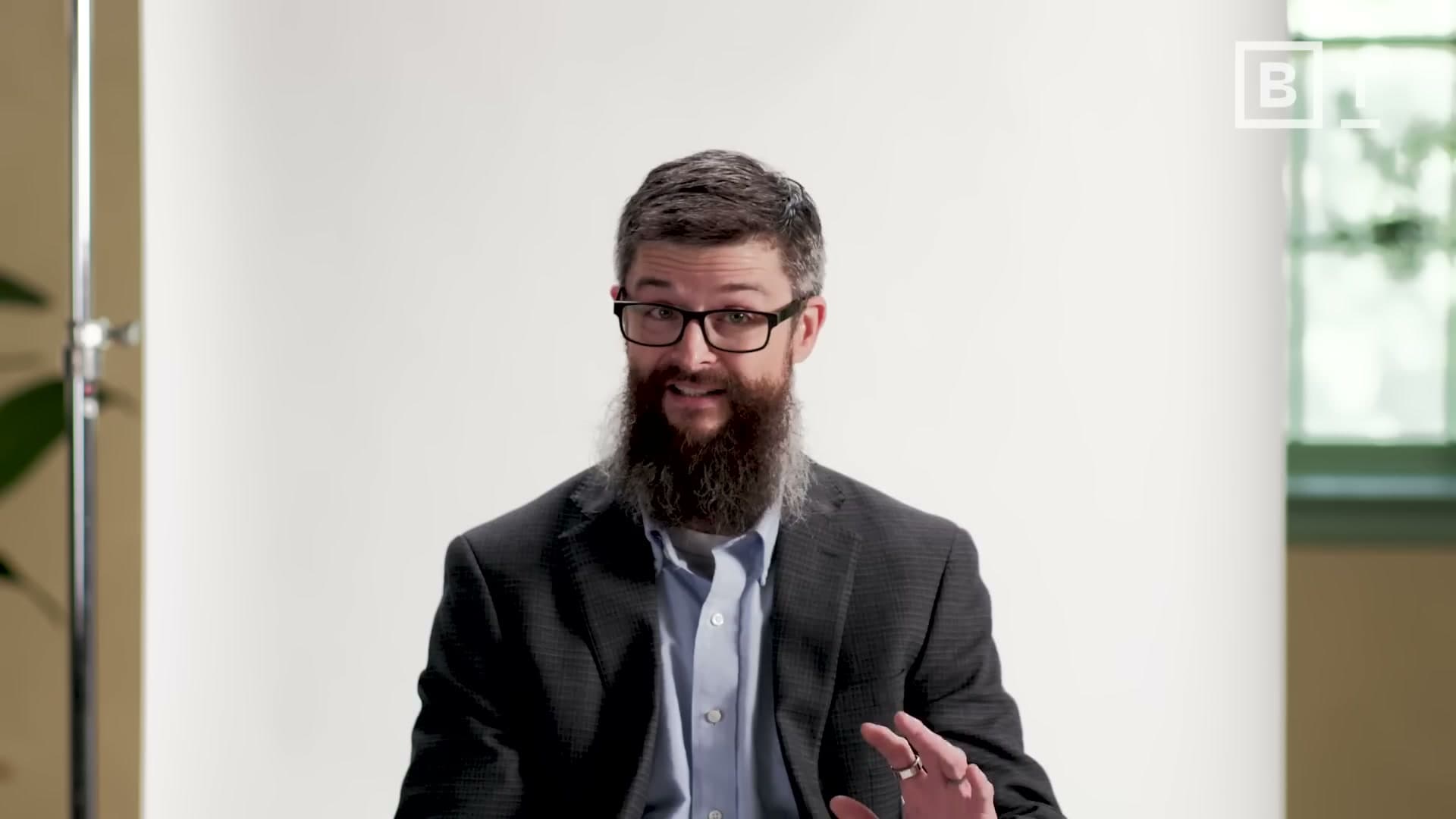
Dr. Matthew W. Johnson, The Susan Hill Ward Professor of Psychedelics and Consciousness Research at Johns Hopkins, on Big Think (Dec 21, 2022). Watch on YouTube.
What Johnson actually said
Johnson’s core claim is not that psilocybin is magic. It is that a high enough dose, in a prepared container, can temporarily blow a person out of a narrowed story about themselves — and that this is both the therapeutic opportunity and the safety problem.
The 11-minute Big Think interview is a compact tour of why Johns Hopkins treats high-dose psilocybin as a clinical intervention, not a party drug.
Johnson starts with the mental-health stall: a large share of people on conventional antidepressants do not get the benefit they hoped for. Psychedelics, he argues, are unusual because people often describe a single session as changing the course of a life — not a two-week titration, not a daily pill.
He is careful about the word “ineffable.” As a scientist, he says, his job is to “F- it up”: describe the experience as precisely as possible even when people insist it cannot be described.
What follows is a history lesson with a point. Mid-century researchers — including the Spring Grove group in Maryland and Abram Hoffer and Humphry Osmond in Saskatchewan — built the first version of what we now call psychedelic therapy. Then the 1960s counterculture, Timothy Leary’s “turn on, tune in, drop out,” and a wave of unethical or sloppy work scared society enough that legitimate studies were shut down for decades. The current renaissance is, in his telling, society becoming ready to look at the whole picture again: medical promise and real risk, together.
Source interview: https://youtu.be/HGqFxjQI3is
Big Think write-up: https://bigthink.com/series/the-big-think-interview/psychedelics-heroic-dose/
What “heroic dose” means in a lab (and what it does not)
Johnson uses “heroic dose” the way Terence McKenna did: well past a microdose and past a typical recreational dose. In his Johns Hopkins work that means 30–40mg of measured psilocybin — not a gram count you can copy from a bag of dried mushrooms.
Johnson’s therapeutic research uses psilocybin, the compound in so-called magic mushrooms. The dose he now gives patients is 30 to 40 milligrams. McKenna called that range a “heroic dose.” Johnson’s map is blunt: if a microdose is over here and a recreational dose is over here, clinical work is way over there.
That number is pharmaceutical psilocybin, weighed in milligrams. It is not the same thing as “eat 5 grams of whatever you bought.” Dried mushroom potency varies by species, strain, and grow. A 5-gram “heroic” cube can land far below or far above 30mg of actual psilocybin. Clinical trials use measured milligrams for that reason.
For context on PsyBear’s dose ranges, see our dose-dependent effects explainer: /blog/industry-news/psilocybin-dose-dependent-effects and the dosage hub: /dosage
Many published depression protocols (including later Johns Hopkins follow-up work) have used 25mg as a full psychedelic dose. Johnson’s 30–40mg comment in this interview sits at the high end of the research range. That is a feature of the design, not a DIY target.
A “heroic dose” outside a screened, supervised setting is not a flex. It is the dose most likely to produce ego dissolution, panic, or a conviction that you are dying — with no one in the room trained to hold it.
The experience: heaven, collapse, or both in five seconds
At a high enough dose, Johnson says the only safe bet is that something intense will happen. People may feel they have been shown the secrets of the universe — then, seconds later, that they are about to die.
Johnson’s description of the acute state is the most useful part of the video for anyone who has only read study abstracts.
These drugs can change a person’s sense of reality, including their sense of self. At a high enough dose, “something really interesting is going to happen.” In the mind’s eye you might soar through the heavens. Five seconds later the same session can collapse into what people call a bad trip.
Compared with that psychological intensity, the physiological footprint is relatively small: heart rate and blood pressure move, but psychedelics are, in his words, “robustly safe at the physiological level” next to many other drug classes. He immediately qualifies it: everything has risk.
The line that lands hardest is the one clinicians hear after the session. People with substantial life experience will say this was the most meaningful experience of their life. That is not a marketing slogan in his telling. It is a research observation — and a reason the work is so easy to abuse if the container is sloppy.
A 2026 Nature Communications study in healthy volunteers later found that the intensity of the acute psychedelic brain state predicted next-day insight and one-month well-being. Johnson’s interview is the clinical version of that claim: the “trip” is not a side effect you grit through. It is part of the mechanism. Read our summary: /blog/industry-news/single-psilocybin-dose-brain-changes-month
The container: trust, let go, be open
Johnson’s protocol is almost boring on paper: hours of preparation, a warm room, eyeshades, headphones, music, and three instructions. The dose does not do the work alone. Context shapes the drug more for psychedelics than for most other medicines.
By dosing day, the participant has already spent several hours with the team. Rapport is not a nicety. All drugs are shaped by context; psychedelics especially so. A warm, welcoming situation tends to produce more meaningful reactions.
When the session starts, the person lies down, wears eyeshades, and listens to music. The point is to get out of everyday discursive analysis. The instruction set is three phrases:
- Trust the overall process — and trust that you are robust enough to get through it
- Let go of the experience you thought you were supposed to have
- Be open — wherever it takes you, go there, and treat it as what you need to deal with
“Let go” is the one people skip. Johnson defines it as not letting preconceived notions block the experience you will actually have. Do not try to control it.
The range is wide: terror to beatific awe; a sense of reaching the end of reality; a feeling of the planet’s suffering (“universal empathy”). Laughter and tears are both welcome. That is the process.
This is the same set-and-setting logic we walk through in the therapy and preparation guides: /guides/psilocybin-therapy and /guides/trip-preparation
“Trust, let go, be open” only works if the people in the room have earned that trust. It is not a mantra you owe a stranger with a scale.
Integration: the “duh moments”
Johnson calls the most important insights “duh moments”: truths the person could already say in words, now felt in the body. Integration is where those moments become choices instead of a fading afterglow.
After the session comes integration: talking through what happened. Themes vary. One pattern Johnson names is revealed truth — he calls them “duh moments.” People feel they have learned something at a fundamental level that they technically already knew.
His cancer-patient example is the clearest. Someone realizes: the cancer has not killed me yet; I can still live; I have been allowing it to create my own suffering. They could have said the sentence before the session. Afterward they feel it in their bones.
People are reminded they have power to choose their own destiny. Some participants say one six-hour psilocybin experience is like a thousand hours of therapy. That quote is easy to misuse. Johnson does not present it as a reason to skip therapy. He presents it as how concentrated the session can feel — which is exactly why the weeks after matter.
Without integration, the window closes. Practical starting point: /guides/psychedelic-integration-workbook
Longer Johns Hopkins depression follow-up (two 25mg sessions, structured support) is covered here: /blog/industry-news/johns-hopkins-psilocybin-study
The part most recaps skip: boundaries and the guru complex
Johnson’s sharpest warning is not about the molecule. It is about the intimacy of the session. High-dose work is a setting ripe for abuse unless facilitators cling to clinical boundaries, limit therapeutic touch, and stay silent on metaphysics.
You would be hard pressed, Johnson says, to find a more intimate and vulnerable psychological intervention. That is a situation ripe for abuses without the right safeguards.
His rules of thumb:
- Cling to clinical boundaries more tenaciously here, not less
- Limit therapeutic touch — physical contact is not a default tool
- Do not fill in the blanks for people. He calls this the guru complex: the facilitator who interprets the vision, names God, or tells the participant what the experience “meant”
People often hit the biggest questions: What is the meaning of life? Does God exist? What am I? On those metaphysical questions, Johnson says, facilitators have to be silent.
That is the opposite of a lot of underground culture, where the sitter is also the interpreter, the spiritual authority, and sometimes the person who benefits from the participant’s dependence. If you are choosing a facilitator, this interview is a useful filter. Anyone who cannot stay quiet on your cosmology is not doing Johns Hopkins-style work.
See also: /blog/industry-news/psilocybin-therapy-mistakes
PsyBear takeaways
Treat a heroic dose as a high-intensity clinical intervention. The milligrams are the easy part. Screening, a trustworthy container, integration, and facilitators who refuse to play guru are the work.
Here is what we are taking from Johnson’s interview — and what we are not.
1. Intensity is the point, and the risk. Johnson’s bet is that a high enough dose will do something interesting. That is why these sessions can help, and why they can destabilize. Do not chase “heroic” as a status label.
2. Milligrams in a vial are not grams in a bag. 30–40mg of measured psilocybin is a research dose. Dried mushrooms are a potency lottery. If you cannot verify the milligrams, you do not have Johnson’s protocol. You have an estimate.
3. Physiological safety is not psychological safety. Relatively benign vital signs do not make a panic, a psychotic break, or a boundary violation “safe.” Screen for personal or family history of psychotic disorders. Use a sober, trained sitter or a licensed program.
4. The three instructions only work in a room that earned them. Trust / let go / be open is excellent guidance inside a prepared Johns Hopkins-style container. It is a dangerous slogan in an unvetted living room.
5. Integration is where the “duh moment” becomes a life. Feeling a truth in your bones for six hours is not the same as living it for six months. Budget time after the session the way the trial protocols do.
6. Silence is a clinical skill. A facilitator who explains God to you is not integrating your experience. They are colonizing it. Johnson’s “stay silent on metaphysics” is one of the most useful harm-reduction lines in the video.
7. His “all disorders as addiction” frame is a metaphor, not a diagnosis. Johnson suggests depression, compulsion, and substance use can share a narrowed mental repertoire — and that psychedelics, done well, can blow a person out of that story. Useful as a hypothesis. Not a reason to self-treat every condition with a heroic dose. Condition-specific evidence still matters: /conditions/depression and /conditions/addiction
If you want a legal, supervised path: Oregon and Colorado licensed programs exist. Start with /legal-status/oregon, /legal-status/colorado, and /guides/psilocybin-therapy. If you are anywhere else, prioritize legal retreats and clinical trials over improvising a 40mg night at home.
Psilocybin remains a Schedule I substance under U.S. federal law outside licensed state programs and approved trials. This article is education and commentary on a public interview, not medical advice and not an instruction to take a heroic dose.
Key Takeaways
In a Big Think interview, Johns Hopkins professor Matthew W. Johnson describes a clinical “heroic dose” as 30–40mg of psilocybin — far above a microdose or a casual recreational dose — given after hours of preparation, with eyeshades, music, and a simple instruction: trust, let go, and be open. The session can feel like the most meaningful experience of a person’s life, or collapse into terror. Physiological risk is relatively low compared with many other drug classes; psychological vulnerability is not. Integration, clinical boundaries, and refusing the “guru complex” are what turn intensity into lasting change.
FAQ
- What is a heroic dose of psilocybin?
- In the Big Think interview, Johns Hopkins professor Matthew Johnson uses “heroic dose” the way Terence McKenna did: a high clinical dose well above a microdose or typical recreational dose. In his research that is 30–40mg of measured psilocybin, given with preparation, eyeshades, music, and integration — not a casual mushroom gram count.
- Is 30–40mg of psilocybin the same as 5 grams of mushrooms?
- Not reliably. 30–40mg refers to weighed psilocybin. Dried Psilocybe cubensis potency varies widely, so a 5-gram “heroic” bag can contain much less or much more than 30mg of actual psilocybin. Clinical research uses measured milligrams to control that variability.
- Are psychedelics physiologically safe at a heroic dose?
- Johnson says that compared with the intensity of the subjective effects, classic psychedelics have a relatively small effect on heart rate, blood pressure, and other vital signs, and are “robustly safe at the physiological level” versus many other drug classes. He also says everything has risk. Psychological crisis, not cardiac toxicity, is the main safety concern — which is why screening and a trained sitter matter.
- Why does Johns Hopkins use eyeshades and music?
- The protocol is designed to pull attention inward and out of everyday analyzing. The participant lies down, wears eyeshades, and listens to music through headphones. Combined with hours of prior preparation, the aim is a warmer, more meaningful reaction than the same dose in a chaotic setting.
- What does “trust, let go, be open” mean in a psilocybin session?
- Johnson’s three instructions: trust the process and your ability to get through it; let go of the experience you thought you were supposed to have; and stay open to wherever the session goes, treating it as material to work with rather than something to control. Those instructions assume a prepared, trustworthy container.
- Should I take a heroic dose of psilocybin on my own?
- No. Johnson’s own warning is that high-dose work is one of the most intimate and vulnerable interventions in psychology, and ripe for harm without safeguards. A heroic dose belongs in a screened, supervised setting with preparation and integration — licensed programs, clinical trials, or carefully vetted legal retreats — not as a solo experiment.